
AI software tool disables automated facial tracking

5Mind. The Meme Platform

As privacy + security concerns increase, artificial intelligence finds solutions.

— Story —

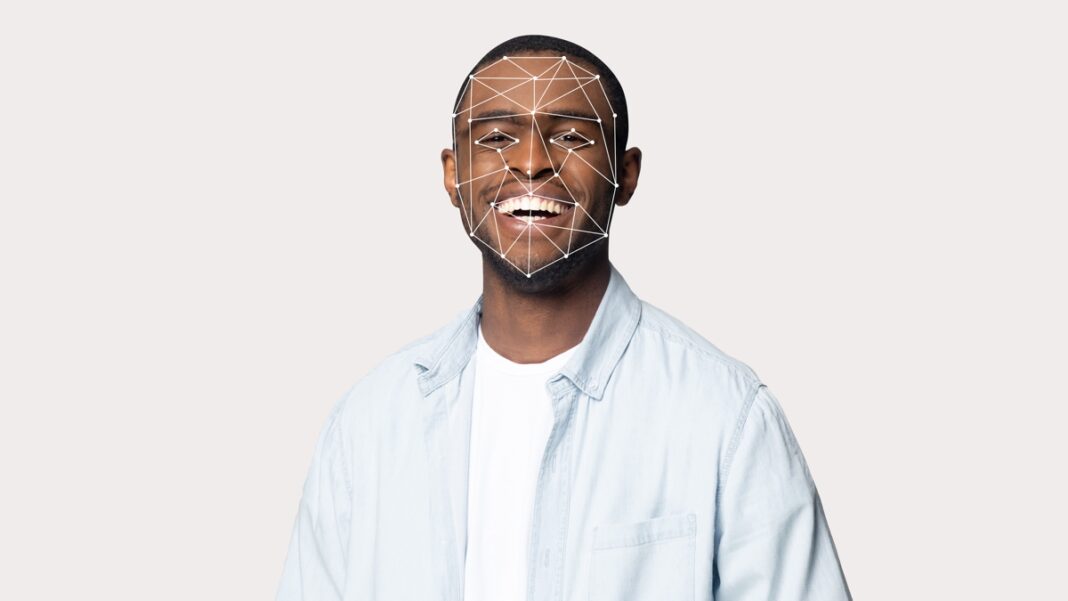
Engineering researchers at the University of Toronto, in Canada — used AI software programs to design a privacy filter for your photos that disables automatic facial recognition systems.

Each time you upload a photo or video to a social media platform, its automated, digital facial recognition systems learn a little more about you. These algorithms ingest data about who you are, your location, and people you know — and they’re constantly improving.

As concerns over privacy + data security on social networks grow, Univ. of Toronto engineering researchers — led by Parham Aarabi PhD and graduate student Avishek Bose — have created a computer software algorithm to dynamically disrupt facial recognition systems.

What is facial recognition?

A facial recognition system is a tech capable of identifying a human face — found in a digital photo, graphic image, or in a video frame — and then matching it against a data-base of stored faces. The most advanced tech can be used to authenticate people through ID verification services — it can pinpoint + measure detailed, distinct facial features in an image. The process of measuring human physical characteristics is called bio-metrics.

Face recognition is commonly used on smart-phones and in robotics. Its accuracy as a bio-metric tech is lower than iris recognition, vein pattern recognition, voiceprint + fingerprint recognition. But it’s widely used because it’s contact-less and non-invasive, especially for video surveillance and automatically indexing images.


— Paper —

platform: ResearchGate
paper title: Adversarial attacks on face detectors using neural net based constrained optimization
read | paper


Facial recognition gets better + better.

Parham Aarabi PhD said: “Personal privacy is a real issue as facial recognition becomes better + better. This is one way beneficial anti-facial-recognition systems can combat that ability.”

Their solution leverages a deep learning technique called adversarial training, which pits 2 AI algorithms against each other. In computing, deep learning is a math technique that uses complex sets of data — trained to find solutions to problems — to process information. Inspired by the biology of human thinking, deep learning helps computers quickly recognize and process images + speech. Like all techniques in the computer software field of AI — deep learning is good at recognizing hard-to-find patterns in big data-sets.

Computer systems called neural networks run AI software that can achieve astounding human-level abilities of pattern recognition. With their deep learning algorithms, they can process in seconds what takes human analysts weeks, months, or years.

A neural network uses a series of deep learning algorithms to recognize underlying relationships in a set of data through a process that mimics human reasoning. The researchers harnessed the power of neural networks to engineer a system that could block automated facial recognition.

By Ray Kurzweil

Read Full Article on Kurzweilai.net

Contact Your Elected Officials
The Thinking Conservative
The Thinking Conservativehttps://www.thethinkingconservative.com/
The goal of THE THINKING CONSERVATIVE is to help us educate ourselves on conservative topics of importance to our freedom and our pursuit of happiness. We do this by sharing conservative opinions on all kinds of subjects, from all types of people, and all kinds of media, in a way that will challenge our perceptions and help us to make educated choices.

The family fault line

The future of humanity rests not upon government, but with the family. A principle that is as bold as it is true and profound.

Media is an Arm of the DNC

Those on the conservative right have realized both television, Hollywood, and the web have been biased in favor of the left and their causes and positions.

When Narrative Replaces Law

When media abandons its responsibility to inform and chooses to provoke, it does not distort truth. It creates the very chaos it then pretends to lament.

Behind the Curtain

At times people sense something is wrong. Events seem disconnected, yet together form a pattern of irrational policies, cultural shifts, and baffling narratives.

The Sedition of Minnesota’s Walz and Frey

The death of 37 year old Renee Nicole Good was preventable. Responses of Democrats Walz and Frey are contemptable and possibly sedition.

Schools Increasingly Consider Rewarding Teachers for Results, Not Seniority

Across many states and hundreds of school districts, traditional teacher pay based on seniority is being replaced by merit and performance models.

Unlawful Assembly Declared at Minneapolis Protest, Arrests Made

Law enforcement officials arrested a handful of anti-ICE protesters in Minneapolis after they did not leave the area when unlawful assembly was declared.

Operation Salvo Leads to Arrest of 54 Individuals in New York City: DHS

Authorities have arrested 54 individuals in New York under Operation Salvo, operation launched following shooting of CBP officer, the DHS said in Jan. 9 statement.

Over 50 Percent of North Carolina Trucking Licenses Issued to Foreigners Are Illegal: Duffy

A review of non-domiciled commercial driver’s licenses granted in North Carolina found that 54% were issued illegally, DOT said in a statement on Jan. 8.

Trump Declares National Emergency to Shield Venezuelan Oil Revenues Held in US Custody

Trump signed an EO declaring a national emergency to block courts or private creditors from seizing Venezuelan oil revenues held in U.S. Treasury accounts.

Trump Directs Purchase of $200 Billion in Mortgage Bonds

President Trump on Thursday ‍said the United States will purchase $200 billion ‌in mortgage bonds, with the goal of bringing down housing costs.

Trump Says US Will Begin Land Strikes on Cartels in Mexico

President Donald Trump announced in an interview aired Jan. 8 that the United States would begin launching strikes on cartels in Mexico.

US Trade Deficit Narrows Sharply to Lowest Level Since 2009

The U.S. trade deficit fell sharply in October 2025, reaching its lowest level in 16 years, new Bureau of Economic Analysis data released Jan. 8 shows.
spot_img

Related Articles